Self-driving trucks have gone from a casual “maybe one day” to a very real “hey, did you just see that rig drive itself?” in the blink of an eye. What once sounded like a sci-fi promise is now rolling down American highways. Tech giants, automakers, and even the U.S. Army test these smart machines, while the auto-transport industry watches every move with a mix of excitement and nerves.
These high-tech haulers are doing more than turning heads: they are hauling freight across states, joining military convoys and reshaping the future of car transport faster than anyone expected. Love it or hate it, the shift is happening. And if you think this revolution is still far off in the distance, think again. It’s already pulling up behind us with the headlights on.
So, keep reading our blog, since there is no better time to understand what this change means for everyone on the road and how to deal with it.
Why Self-Driving Trucks Matter More Than Ever
The trucking industry moves America, literally. Millions of vehicles, products and supplies depend on long-haul drivers who push thousands of miles week after week. But with shortages, high demand and rising costs, the industry is looking for something faster, safer and more efficient. That’s where autonomous trucks enter the chat.
These trucks can cruise through long stretches of highway without breaks, without fatigue and without distraction.
Faster delivery times? Absolutely.
Lower costs? Very likely.
More consistency? That’s the goal.
But let’s be honest, this isn’t a magic switch. It’s a massive transformation with big questions attached.
The Big Fear: Will Truck Drivers Be Replaced?
This question has sparked more debates than pineapple on pizza. Yes, automation is changing jobs across every industry. Robots build cars. Machines pack food. And data shows that automation, not outsourcing, has driven most job losses in manufacturing. But when it comes to trucking, the story isn’t so black-and-white.
A Brookings Institution analysis suggests that “driver replaced by robot” headlines exaggerate the truth. Truck drivers do far more than hold a steering wheel. They handle inspections, secure loads, navigate tight streets, communicate with dispatch, monitor vehicle conditions, check VINs and manage unexpected complications. Self-driving trucks can’t do all that. They can help, but they can’t replace the human touch.
Are Self-Driving Trucks Actually Safe?
Here’s the million-mile question. Humans get tired, stressed, distracted and sometimes downright reckless. In 2020, there were about 415,000 police‑reported crashes involving large trucks. Self-driving algorithms rely on advanced sensors – radar, lidar, GPS and cameras – to see the road in ways humans can’t. They react within milliseconds. They calculate risks before we even notice them. But, and this is important; no system is perfect.
Bad weather, sudden obstacles, construction zones, unpredictable drivers: all these can confuse even the smartest AI.
Self-Driving Trucks Are Getting Better Fast
Google, Tesla, Daimler, Otto, Freightliner, Peloton Technology and other big names are investing billions to make autonomous driving smarter and safer.
Elon Musk famously said that once self-driving vehicles outperform even the average human driver, “we have a responsibility to put them on the road.”
And they are improving. Each highway mile teaches the system something new. Each delivery trains the AI to make better decisions. Machine learning doesn’t sleep: it keeps evolving.
Toe-to-Toe With Traffic: Are Autonomous Trucks Too Close on the Roads?
If you have ever seen a self-driving truck glide perfectly centered in its lane, you probably felt a little uneasy. Many drivers say they feel these trucks are “too close for comfort. But here’s the twist: humans sway, drift and correct, while autonomous vehicles do not. They stay exactly where the sensors say they should be. It feels strange because we’re used to human imperfection. But these trucks move with the precision of a gymnast on a balance beam: no wobbling, no second-guessing. Still, adaptation takes time. Sharing the road with robots feels new, and new always feels a little scary.
Real-World Testing: Military, Tech Companies & More
Self-driving trucks aren’t just test-track miracles: they are already being tested in real traffic.
The U.S. Army
The Army tested autonomous four-truck convoys in Michigan, using lidar, shortwave radio, and real-time communication. Their goal? Reduce risk to soldiers and automate dangerous transport missions. They are aiming to deploy this tech within 10–15 years.
Peloton Technology
Peloton tested two-truck platoons (think of it as advanced cruise control) near Columbus, Ohio. Human drivers are still required, but the trucks coordinate their movements as tight as a marching band.
Otto Technologies
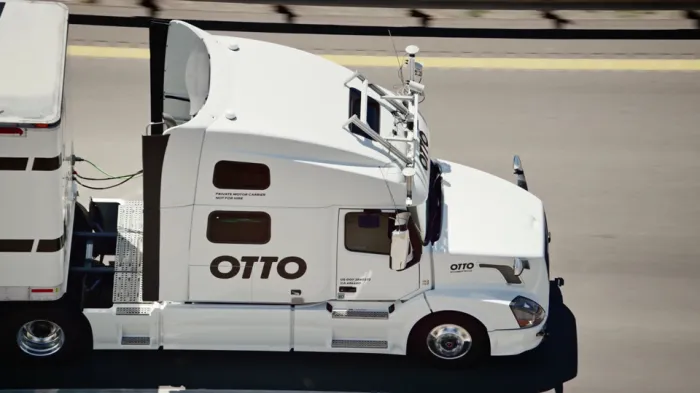
Otto tested truly autonomous long-distance trucks in California, equipped with lasers, cameras, radar, and sensors. These trucks can drive from freeway on-ramp to off-ramp without human input, though they struggle in bad weather and dense cities.
Tesla
Unlike others, Tesla wants autonomous trucks that can handle urban chaos. Think tight turns, buses, unpredictable traffic, pedestrians: everything.
It’s a bold approach, but Tesla has never been afraid of boldness.
What About Auto Transport? Will Car Shipping Go Driverless?
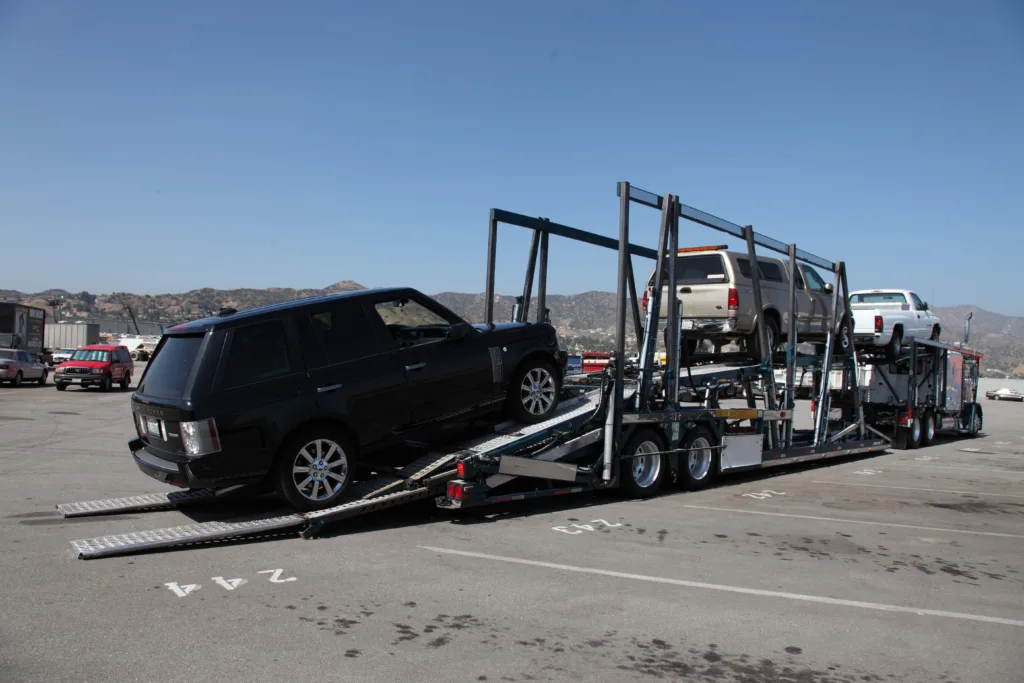
Not yet and not anytime soon. Self-driving tech works best on predictable highways. But car hauling is anything but predictable.
Auto transport requires:
- loading and unloading multiple vehicles
- handling enclosed carriers
- performing inspections
- managing VIN verification
- driving into neighborhoods, auctions, dealerships
So even as autonomous trucks help with long hauls, human drivers remain absolutely essential for car shipping.
Why the Auto Transport Industry Still Needs Humans
Even in a high-tech future, people will still handle:
- complex delivery locations
- classic/exotic vehicle handling
- enclosed trailer operation
- door-to-door pickups
- auctions and fleet logistics
- paperwork, routing, customer service.
A self-driving truck can get you from Point A to Point B. A human driver makes sure the right vehicle gets there safely.
A Future of Humans + AI, Not Humans vs. AI
So here’s the truth: self-driving trucks will transform the industry, but they won’t make drivers disappear. Instead, roles will evolve: think less “hands on the wheel” and more “eyes on the system.” Drivers will focus on monitoring, managing and making critical decisions, while long-haul fatigue and repetitive tasks are handled by AI. It’s a true partnership: humans bring judgment, care and expertise, while artificial intelligence delivers consistency, efficiency and data-driven precision.
The Road Ahead: Exciting, Uncertain, and Closer Than You Think
Autonomous trucks are coming: slowly, safely and steadily. They offer incredible potential, but they also raise valid questions. If there is one thing we know about technology, it is the fact that it doesn’t stop for anyone, but it does need everyone. The future of trucking isn’t driverless. It’s driver-smarter, safer and more connected than ever.