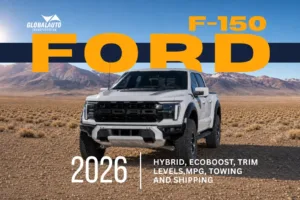
 Shopping for a full-size truck isn’t as simple as picking a model and calling it a day. Even within the F-150 lineup, two trucks can look nearly identical on the lot but deliver completely different ownership experiences. That’s especially true with the 2026 Ford F-150. Ford offers multiple engine choices, several cab and bed configurations, and a wide range of trim levels that can turn the truck into anything from a basic workhorse to a comfortable family vehicle or a serious towing machine.
If you’re comparing a Ford F150 hybrid to an F150 EcoBoost, trying to understand Ford F150 trim levels, or simply wondering which setup offers the best balance of F150 MPG, capability, and everyday usability, you’re not alone. The number of available configurations can be overwhelming. This guide breaks down the 2026 F150 in practical terms, covering engine options, trims, fuel economy, towing capability, cab choices, and the real-world differences that matter most when deciding which truck belongs in your driveway.
2026 Ford F-150 Engine Options: Hybrid, EcoBoost and V8
This is usually where people start. The engine. Because everything else kind of makes more sense after that. With the 2026 Ford F-150 engine options, Ford still keeps it pretty flexible. You’ve got the Ford F150 hybrid, the familiar F150 EcoBoost lineup, and the traditional V8 for people who just want that old-school truck feel. And honestly, none of them is “wrong.” They just behave differently in real life. Some drivers want something that saves fuel without feeling weak. Others want towing strength that doesn’t flinch. And some just want simple, proven power. That’s basically the split.
Ford F-150 Hybrid and PowerBoost
The Ford F150 hybrid, also known as the PowerBoost, is the one people are most curious about right now. And usually the first question is pretty simple: does it actually feel like a real truck? Short answer, yes. It doesn’t feel like a science project.
In normal driving, it’s smooth. Quiet when it needs to be. And it definitely helps in stop-and-go traffic where traditional engines just burn fuel for no reason. That’s where the F150 PowerBoost quietly makes sense. But the interesting part is this: it’s not just about MPG. The hybrid system also adds a bit of extra confidence when towing or hauling. Not magic, just… steady power when you need it. That said, F150 MPG numbers with the hybrid aren’t something you can pin down as one fixed figure. Highway cruising, city traffic, towing a trailer it all changes things. Even small stuff like tires or payload starts to matter more than people expect.
F-150 EcoBoost Options
Then you’ve got the F150 EcoBoost engines, which are kind of the middle ground most people end up comparing everything against. The 2.7L EcoBoost feels like the everyday version. Easy to live with. Enough power for normal driving, commuting, light towing. Nothing dramatic, which is kind of the point. The 3.5L EcoBoost is where things feel more serious. It’s the one people think of when they picture a properly capable F-150. Stronger pull, more confidence under load, and just more “I don’t need to worry about it” energy. A lot of buyers bounce between the EcoBoost and the Ford F150 hybrid for a while before deciding. Because both make sense in different ways. One leans fuel savings, the other leans traditional turbo power. And depending on your driving, either one can feel like the better call.
V8 and Performance-Focused Versions
The V8 still exists for a reason. Some people just prefer it. The sound, the feel, the simplicity. It’s not trying to optimize anything, it just works. Then there’s the performance side, like the Raptor models. But those aren’t really about towing numbers or MPG discussions. They’re more about off-road control, speed on rough terrain, and a completely different personality compared to a standard 2026 F150 setup.
2026 Ford F-150 Trim Levels
Trim levels are where things start to feel personal. With Ford F150 trim levels, you’re not just picking features, you’re basically choosing how “premium” or how “work-focused” your truck experience is going to be.
The lower trims feel straightforward. Built for getting things done. No unnecessary extras, no distractions. The higher you go, the more comfort and tech you start noticing, until eventually it feels less like a work truck and more like a daily SUV that just happens to tow 10,000 pounds. Most people don’t think about the Ford F150 trim levels in order too deeply, but the pattern is pretty simple once you live with it for a bit.
Work-Focused Trims
The XL is the kind of truck that shows up early, leaves late, and doesn’t complain. It’s basic in a good way. STX feels like a slightly more styled version of that same idea. Still work-first, still practical, just with a bit more presence when you look at it from the outside.
Comfort and Family-Friendly Trims
This is where things get interesting for everyday drivers. The XLT is probably the most common sweet spot. It doesn’t feel stripped down, but it also doesn’t push into luxury pricing. Just comfortable enough to live with every day. Then the Lariat steps it up. The cabin feels more refined, the tech feels more intentional, and long drives start to feel noticeably easier. If someone is using the truck as a daily driver, this is usually where they end up looking.
Off-Road and Premium Trims
The Tremor, King Ranch, Platinum, and Raptor models all sit in their own space. Tremor leans off-road without going full extreme. King Ranch and Platinum feel more like premium road-going trucks with real comfort upgrades. And the Raptor lineup… that’s its own thing entirely. Fast, aggressive, built for terrain that would make most trucks slow down.
Cab, Bed and Configuration Choices
This part is less exciting on paper, but it matters more than people think. Choosing between a Ford F-150 SuperCab, SuperCrew, or Regular Cab changes how the truck actually fits into your life. The F150 extended cab (SuperCab) gives you that extra space behind the seats. Good for tools, gear, or occasional passengers. The SuperCrew is the one most families end up with because the rear seats are actually usable, not just “technically there.” Bed size is another one of those decisions you don’t feel until later. A longer bed is better for hauling and towing stability. A shorter bed is easier to park and live with in tight areas. It’s always a trade-off.
Interior, Technology and Daily Use
Inside the 2026 Ford F-150 interior, it’s clear Ford is trying to balance two worlds. Lower trims feel durable. Easy to clean. Built for real use. Higher trims start adding more comfort, better screens, better seating, and features that make long drives less tiring. The Ford F150 technology is also more useful than flashy. Things like towing assistance, trailer guidance, and driver support features actually matter when you’re hauling something heavy or driving long distances. As a daily driver, the surprising thing is how normal it feels. You don’t constantly feel like you’re driving a “big truck” after a while. You just… get used to it.
F-150 MPG: What Buyers Should Compare
Talking about F150 MPG is always tricky because there’s no single answer that fits the whole lineup. The 2026 Ford F-150 MPG changes depending on engine choice, drivetrain, weight, tires, and even how you drive. And that’s not marketing talk, it’s just how trucks work. The Ford F150 hybrid MPG tends to be strongest in city driving. EcoBoost engines sit in the middle with a balance of power and efficiency. And the V8 and off-road setups lean more toward performance than fuel savings. So instead of chasing one number, it makes more sense to think in terms of how you actually use the truck day to day.
2026 Ford F-150 Towing and Payload
Towing with the 2026 Ford F-150 is where configuration really shows its impact. Two trucks with the same badge can feel very different once you hook up a trailer. Engine choice, axle ratio, cab size, bed length all of it plays a role. That’s why F150 EcoBoost towing and F150 PowerBoost towing numbers vary so much depending on build. One setup might feel effortless, another more moderate. Same truck name, different reality. And with the Raptor models, towing isn’t really the main story. They can do it, but they’re built for off-road performance first. So comparing them directly with standard F-150 builds doesn’t really tell the full story.
Which 2026 Ford F-150 Is Right for You?
This is where it all comes together. If you’re thinking daily driving with decent efficiency, the Ford F150 hybrid or smaller EcoBoost makes sense. If towing or work is the priority, the 3.5 EcoBoost or PowerBoost starts looking more practical. If you want simplicity, the V8 is still there doing what it’s always done. Trims follow the same logic. XL and STX for work. XLT and Lariat for everyday use. Higher trims for comfort, luxury, or off-road performance. The truth is, there isn’t one “best” 2026 Ford F-150. There’s just the version that fits your routine without getting in the way.
The 2026 Ford F-150 works because it doesn’t force a single identity. It adapts. Hybrid, EcoBoost, V8, different trims, different setups it all changes depending on what you need from it. Just don’t treat the specs like fixed truth. Always check the exact configuration you’re looking at, because towing, MPG, and even driving feel can shift more than you’d expect.
And if that truck ends up being part of a move or relocation, getting it shipped properly can save a lot of stress. A service like Global Auto Transportation is often what people turn to when they want the vehicle handled safely without adding extra logistics to an already busy situation.