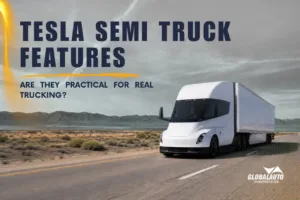
 The Tesla Semi truck is Tesla’s all-electric Class 8 semi truck, and it is one of the most talked-about electric trucks in the freight industry. So, is Tesla making a Semi? Yes. Tesla lists the Semi as part of its vehicle lineup and says fleets can contact the company to learn more about ordering one or more Semi trucks.
The bigger question is not whether the Tesla truck exists. The real question is whether its features are practical for real trucking work. On paper, the Tesla Semi has strong range, fast charging, high power, modern safety systems, and a very different interior compared with a diesel semitruck. But fleets still have to look at price, availability, charging access, payload, service support, and daily route planning.
A useful Tesla Semi review should stay balanced. The truck may be a strong fit for regional freight, predictable routes, and depot-based charging. But that does not mean it will quickly replace diesel trucks across the whole trucking industry.
Tesla Semi Specs: Range, Charging, and Power
The main Tesla Semi specs start with range and charging. Tesla lists the Semi with up to 500 miles of range, 1.7 kWh per mile energy consumption, and the ability to recover up to 60% of range in 30 minutes using Tesla Semi Chargers. Tesla shows two versions. The Standard Range model is listed at approximately 325 miles, while the Long Range model is listed at approximately 500 miles. Both versions have an 82,000-pound gross combination weight rating, three independent motors on the rear axles, up to 800 kW of drive power, MCS 3.2 charging, and up to 25 kW ePTO. Tesla lists the Standard Range curb weight under 20,000 pounds and the Long Range curb weight at 23,000 pounds.
How fast can the Tesla Semi go? Tesla focuses more on acceleration and hill-climbing than top speed. Early Tesla Semi coverage reported that the truck could reach 0–60 mph in about 20 seconds with a full 80,000-pound load and maintain 65 mph on a 5% grade, while a comparable diesel truck was described as slower under the same condition. For fleets, range and charging matter more than headline speed. A semi truck has to finish the route, recharge on schedule, and keep freight moving.
That is why the Tesla Semi truck may work best for regional freight, warehouse-to-store routes, port drayage, and dedicated lanes where daily mileage is easier to plan. Tesla also highlights active safety features, advanced motor and brake controls, traction and stability support, and a central seating position for better visibility. These features matter, but charging access will still decide how practical the truck is for many routes.
Tesla Semi Truck Interior: What Drivers Actually Get
The Tesla Semi truck interior is one of the biggest differences between this electric truck and a traditional semi truck interior. The driver sits in the center, with wide visibility and dual screens around the steering wheel. Tesla’s own page shows the driver’s view with two touchscreens, and MotorTrend’s Tesla Semi review describes a cabin built around screens, storage, visibility, and simple access to key functions.
The Tesla truck interior includes camera views, tire pressure information, suspension settings, trailer hitch controls, HVAC controls, navigation, trip functions, wireless phone chargers, cupholders, storage cubbies, and exterior storage lockers behind the doors. MotorTrend also noted that the cabin has only a few physical controls, including switches for the hazards, parking brake, and trailer-brake air supply.
One unusual cabin detail is the window design. The windows do not roll down. Instead, MotorTrend reported that they use pop-out handles that are open enough for tolls or paperwork. The same review noted that Tesla appears to leave room for a possible sleeper-cab idea, but that should not be treated as a confirmed production feature.
For drivers, this Tesla Semi truck interior may feel clean, quiet, and modern. For real trucking work, the question is whether the layout stays comfortable during long shifts, inspections, dock visits, traffic, paperwork, and repeated stops.
Tesla Semi Truck Price, Availability, and Early Fleet Orders
Tesla Semi truck price and availability are still major questions for fleets. How much will a Tesla Semi cost? A report summarizing MIT Technology Review’s coverage listed the base Semi at about $260,000 and the long-range version at about $300,000. That is higher than early expectations from the 2017 reveal, but still lower than many comparable battery-electric Class 8 trucks.
Are Tesla Semi trucks available?
They are not widely available like diesel trucks yet. Tesla says fleets can contact the company to learn more about ordering one or more Semi trucks, but public delivery numbers remain limited. Reuters reported in 2024 that PepsiCo originally ordered 100 Tesla Semis and was using 36 because of delivery shortfalls.
How many Tesla Semis have been delivered?
Tesla has not published a clear full customer delivery total in the way fleets would usually expect from a high-volume truck program. Public information points to early customer use, pilot deployments, and a wider 2026 production push rather than broad market availability.
Who uses a Tesla Semi?
PepsiCo/Frito-Lay has been one of the most visible early users. WattEV also ordered 370 Tesla Semi trucks, with the first 50 planned for 2026 and the full fleet expected by the end of 2027. Those trucks are tied to California electric freight operations and megawatt charging infrastructure.
How to buy a Tesla Semi?
For now, the answer is simple: use Tesla’s official Semi contact form and expect a fleet-focused process. Tesla asks for company details, fleet size, trim preference, and operation information instead of offering a normal consumer checkout page.
Some readers also ask whether Elon Musk is 100% owner of Tesla. No. Tesla is a public company with shareholders. Tesla’s own shareholder materials describe shareholders as owners of the company, while Elon Musk is Tesla’s CEO and a major figure in the company, not its only owner.
Tesla Semi vs. Diesel Semi Truck: What Changes for Fleets?
A Tesla Semi vs. diesel semi truck comparison starts with fuel. Diesel trucks can refuel quickly across a large national network. A Tesla Semi truck needs charging infrastructure, enough downtime, and routes planned around battery range. Tesla says electricity can be cheaper per mile than diesel and that battery-electric maintenance can be lower because electric powertrains do not use diesel aftertreatment systems. Tesla also says local and regional operators may reach a positive return on investment before their normal diesel replacement cycle.
Are Tesla Semis good? They can be good for the right operation. A fleet with regional routes, depot charging, predictable freight, and strong charging access may see more value than a fleet running irregular long-haul lanes. Electric trucks need the route to match the charging plan. Diesel trucks still have advantages. They offer fast refueling, more route flexibility, a familiar service network, strong resale familiarity, and proven long-haul durability.
Battery weight can also affect payload planning because the full tractor-trailer combination must stay within legal weight limits. This is why the Tesla Semi truck should not be viewed as a simple diesel replacement for every fleet. It is better to see it as a route-specific tool. For some trucks, it may lower operating costs and emissions. For others, diesel may still be easier to manage.
What the Refreshed Tesla Truck Could Mean for the Trucking Industry
Tesla has refreshed the Semi before wider volume production. Car and Driver reported that the updated Tesla truck includes a revised front end, full-width light bar, reworked bumper, aerodynamic channels, and new camera placement. The same report noted Tesla’s claims of better efficiency, improved payload, 500-mile range, 1.2 MW charging, and up to 1,072 horsepower. This refreshed Tesla Semi truck could increase pressure on other electric truck makers and traditional truck manufacturers. If Tesla can scale production and support charging, the Semi may become a serious electric semi truck option for fleets that want lower emissions and more predictable energy costs.
The Tesla Semi was first shown in 2017, and volume production has taken years to reach this point. Car and Driver also noted that only a small number had been built in the years after the reveal. Some readers ask who the richest trucking company is, but that question does not decide whether the Tesla Semi is practical. By revenue, UPS is often listed as the biggest trucking company, followed by FedEx in major rankings. Still, the more important question for fleets is not company size. It is whether the truck fits the route, payload, charging plan, and total cost of ownership.
Is the Tesla Semi Ready for Everyday Freight Use?
The Tesla Semi truck has strong features. Its range, charging speed, power, active safety systems, and driver-focused interior make it one of the most interesting trucks in the electric freight market. How long will a Tesla Semi last? Tesla has not turned every long-term fleet result into a simple public answer yet. However, Tesla Semi program lead Dan Priestley has said the battery pack is designed to last a million miles in its original duty cycle, according to Electrek’s coverage of the Semi program. Real-world battery life will still depend on route type, charging habits, load, climate, maintenance, and fleet use.
The Tesla Semi may be most practical for regional freight, depot-based charging, port routes, predictable delivery lanes, and fleets that can plan around charging needs. It may be less simple for long-haul work where diesel fueling, payload flexibility, and service access still matter. Even the word “semi” reminds readers what this truck is built to do.
A semi truck, or semitruck, pulls a semi-trailer, which does not have a front axle and depends on the tractor for support. The Tesla Semi is Tesla’s electric version of that familiar freight setup. For now, fleets should watch Tesla Semi price updates, charging infrastructure, battery life data, service support, real-world Tesla Semi review results, and electric trucking adoption before making a major business decision.