 Should you choose open vs. enclosed car shipping for your vehicle? The answer depends on what you are moving, how much protection you want, and how much you plan to spend.
Both methods can provide reliable vehicle transportation when experienced carriers handle the move. However, they use different trailers and offer different levels of outside protection. Open shipping is widely available and usually costs less.
Enclosed shipping offers additional coverage from weather, dirt, and road debris. When comparing open or enclosed car shipping, consider your vehicle’s value, condition, ground clearance, route, timing, and personal comfort level. This guide explains how each option works and helps you decide which service better fits your shipment.
What Is Open Car Transport?
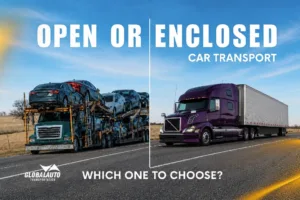
So, what is open transport? Open car transport moves vehicles on a trailer without solid walls or a roof. You have probably seen these multi-level carriers transporting new cars along the highway. An open shipment leaves the vehicle exposed to normal outdoor conditions during transit. That may include rain, dust, insects, and small amounts of road debris. However, the vehicles remain secured to a carrier designed specifically for auto transportation. Open car transport is the most common and budget-friendly shipping method. It works well for:
- Standard cars, pickup trucks, and SUVs
- Daily drivers and family vehicles
- Dealership and rental inventory
- Auction purchases
- Fleet relocations
- Multi-car shipments
An open trailer car transport carrier can often move several vehicles at once. Sharing the trailer space helps distribute transportation costs across multiple shipments, which usually makes open service more affordable. When comparing open vs enclosed car transport, open shipping is often the practical starting point for vehicles that do not require special protection.
What Is Enclosed Car Shipping?
Enclosed car shipping uses a trailer with a roof and covered sides. The trailer helps protect vehicles from weather, dirt, dust, road debris, and outside exposure while they are in transit. What is the meaning of an enclosed vehicle shipment? It simply means the vehicle travels inside a covered trailer rather than on an exposed carrier. Open shipping may be a hard-side or soft-side trailer. Hard-side trailers use solid walls, while soft-side trailers use protective curtains. Depending on the shipment and carrier availability, enclosed trailers may transport one vehicle or several vehicles at a time.
This type of covered car transport is often chosen for:
- Luxury and exotic vehicles
- Classic or collector cars
- Vintage and rare models
- Sports cars
- Restored or show vehicles
- Cars with custom paint or trim
- Newly purchased high-value vehicles
Enclosed service can also make sense for cars with low ground clearance, wide wheels, carbon-fiber parts, or other features that may require added care during loading and transportation. In an enclosed vs. open car shipping comparison, enclosed transport provides more protection from outside elements. However, that additional protection generally comes with a higher price.
What Is the Difference Between Open and Enclosed Car Shipping?
The main difference between open vs. enclosed car shipping is the trailer design and the amount of protection it provides. Open carriers have no solid walls or roof. Enclosed carriers place the vehicle inside a covered trailer. This difference affects cost, availability, scheduling, and the types of vehicles commonly moved with each service.
Open transport is usually
- More affordable
- More widely available
- Suitable for most everyday vehicles
- Practical for dealerships and multi-car loads
Enclosed transport is usually
- More expensive
- Less widely available
- Better protected from weather and road debris
- Preferred for rare, luxury, exotic, or custom vehicles
Customers sometimes search for open vs. closed car shipping, but “enclosed car shipping” is the more common industry term. The right choice is not simply about which trailer is better. Your decision should account for the vehicle’s value, route, condition, ground clearance, delivery timeline, and the protection level you prefer. Pricing for open vs enclosed auto transport may also depend on distance, trailer availability, season, vehicle size, operating condition, pickup access, and delivery location.
When Is Open Car Shipping Best?
Open shipping makes sense for most standard vehicle moves. It offers a balance of affordability, availability, and dependable transportation. If you are shipping a daily driver, family SUV, dealership purchase, rental vehicle, or standard pickup truck, open service may provide everything you need. Open trailers can carry several vehicles, which helps keep the cost lower than enclosed transportation. More open carriers operate nationwide, so customers may also have more scheduling options. However, actual pickup timing still depends on the route, season, vehicle details, and carrier availability.
What’s the cheapest way to ship a car? In most cases, open car transport is the lower-cost option. Choosing flexible pickup dates and accessible pickup and delivery locations may also help reduce the rate. When deciding between open or enclosed car shipping, open service may be the better fit when
- The vehicle is a standard model or daily driver
- Keeping the price lower is a priority
- The car does not have delicate custom features
- You are moving several vehicles
- You have some flexibility with scheduling
Open shipping is also widely used by dealerships, fleet operators, auction buyers, rental companies, and businesses that move vehicles regularly.
When Is Enclosed Shipping Worth It?
Is enclosed shipping worth it? It may be when the cost of additional protection matches the value or condition of the vehicle. Owners of luxury, classic, rare, and exotic vehicles often prefer enclosed transportation because the trailer helps shield the car from rain, dust, insects, and road debris. It can also reduce unnecessary outside exposure during a long-distance shipment.
Enclosed service may be worth considering for:
- Sports cars with low ground clearance
- Classic or vintage vehicles
- Custom paint and bodywork
- Rare or limited-production models
- Expensive wheels or exterior parts
- Show cars and restored vehicles
- High-value dealership purchases
Is an enclosed trailer better? It offers more outside protection, but that does not mean every vehicle needs it. Paying more for an enclosed car carrier may not be necessary for a standard daily driver. Enclosed rates are usually higher because fewer enclosed trailers operate on many routes. They may also carry fewer vehicles than large open carriers. The final price for covered car transport depends on the route, distance, vehicle type, trailer style, timing, and available carriers. A soft-side trailer, hard-side trailer, single-car carrier, or multi-car enclosed trailer may be used depending on the shipment.
What Is the Safest Way to Transport a Car?
Customers often ask, “What is the safest way to transport a car?” Both open and enclosed transport can be safe when a qualified carrier uses proper loading, securement, and transportation procedures. Open carriers move thousands of standard vehicles and remain a reliable choice for most shipments. Enclosed transportation provides the highest level of protection from outside elements because the vehicle travels inside a covered trailer. This makes it the preferred option for cars that need added care or reduced exposure. However, no transportation method should be described as completely risk-free. Weather, road conditions, loading access, and unexpected events can affect any shipment.
When asking, “Is open or enclosed transport better?” Consider what kind of risk matters most to you. Open transport may be better when affordability and carrier availability are the main priorities. Enclosed transport may be better when your vehicle’s value, paint, clearance, rarity, or custom features justify additional protection. Before booking, provide accurate details about the vehicle. Tell the transport company if it has:
- Low ground clearance
- Oversized wheels
- Custom bodywork
- Mechanical problems
- Modified dimensions
- Loose or removable exterior parts
Accurate information helps the company locate a trailer and carrier that can handle the vehicle properly.
How Much More Does Enclosed Car Shipping Cost?
Enclosed shipping generally costs more than open transport, but there is no single price difference for every move.
The rate depends on:
- Shipping distance and route
- Vehicle size and weight
- Vehicle value and condition
- Open or enclosed trailer availability
- Pickup and delivery access
- Seasonal demand
- Scheduling flexibility
- Required loading equipment
Enclosed trailers are used less frequently and may transport fewer vehicles per load. These factors contribute to the higher rate. Open carriers are more common and can move several vehicles together. This usually makes open shipping the more economical choice. The most useful way to compare pricing is to request quotes for both services using the same vehicle, route, and pickup timeframe. This allows you to see what the added protection would cost for your specific shipment.
Choosing open or enclosed car shipping comes down to your vehicle, budget, route, timing, and protection needs. Open shipping is usually the practical choice for standard vehicles, daily drivers, dealership inventory, and customers who want a lower transportation cost. Enclosed shipping provides additional protection for luxury, classic, exotic, rare, restored, and high-value vehicles. Neither option is automatically right for every customer. In the enclosed vs open car shipping decision, consider what you are transporting and how much outside exposure you are comfortable with. Global Auto Transportation can help you compare open vs. enclosed car transport options based on your vehicle and route. Request a quote to review pricing, trailer availability, and the service that makes the most sense for your move.