 At first, it sounds like a simple choice: open vs enclosed car shipping. One is open, and the other one is covered. Done, right? Not really.
Once you start looking into it, you realize this decision actually affects a few important things: how much you pay, how your car is handled, and how comfortable you feel while it’s in transit. And that’s usually where people pause for a second. Because it’s not just about moving a car. It’s about how it gets there.
What Does Open Shipping Mean, and Why Do Most People Choose It?
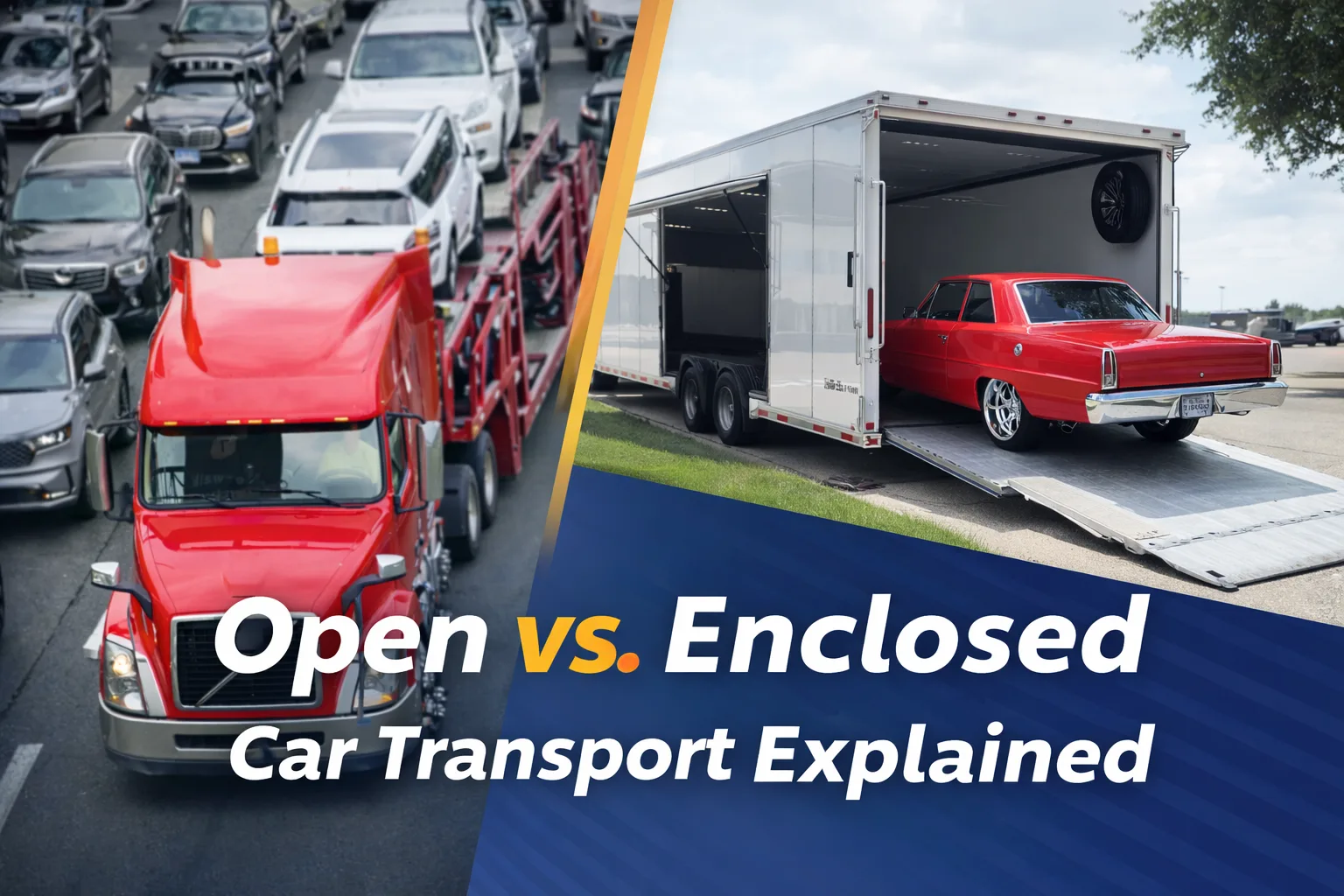
If you’ve ever seen a truck carrying multiple cars on the highway, you’ve already seen what open transport is. So when people ask, “What does ‘open shipping’ mean?” or even “What does ‘open shipment’ mean?” it’s simply this: your car is transported on an open trailer, exposed to the outside environment.
At first, that sounds like a downside. But here’s what often gets missed: this is how most cars are shipped across the country. Not occasionally. Constantly. Manufacturers use it. Dealerships use it. People relocating use it. And there’s a reason for that. It’s practical. It’s efficient. And it keeps costs reasonable. You’re not paying for extra layers of protection you may not need. You’re paying for reliable transport that gets the job done.
What Is an Enclosed Trailer, and What Does It Really Change?
Now let’s shift to the other side of enclosed vs open car shipping. An enclosed car carrier is designed to protect your vehicle from the outside world. The car is loaded into a trailer that’s either fully sealed or covered, which means no exposure to weather, dust, or road debris.
So, if you’re wondering, “What does it mean for a car to be enclosed?”
It really comes down to one idea: controlled conditions. This type of covered car transport is usually chosen when the vehicle itself justifies that extra layer of care. Think luxury cars, collector vehicles, or anything where even minor imperfections matter. It’s not just transportation at that point; it’s protection.
Open vs Enclosed Car Shipping: What’s the Difference in Real Life?
On paper, the difference between open vs enclosed auto transport seems obvious. But in real life, it’s more about how those differences actually affect you. With open transport, your car is exposed. Not in a risky, dramatic way, but it will experience normal road conditions. Weather changes, dust, maybe small debris. The same things it would encounter if you were driving it yourself. With enclosed transport, that exposure is almost completely removed. The car stays protected the entire time.
That’s the core difference. But then comes the second part: cost. Open shipping is the more affordable option. Enclosed shipping costs more because fewer cars are transported at once, and the service itself is more specialized. So when people compare open vs closed car shipping, what they’re really deciding is how much that added protection is worth to them.
Is Open or Enclosed Transport Better?
This question comes up constantly: “Is open or enclosed transport better?”
The honest answer is… neither one is universally better. If you’re shipping a standard vehicle and just need it delivered safely, open transport is more than enough. It’s used every day, and it works. But if you’re dealing with something high-value, rare, or sentimental, enclosed transport starts to make more sense. It’s not about one being safer than the other in general. It’s about how much risk you’re willing to accept for your specific car.
What’s the Best Way to Ship a Car?
People often ask this expecting a single answer. But there isn’t one. The best way depends on what matters more to you: cost or protection. If your focus is staying within budget, open transport is usually the right call. It’s efficient, accessible, and widely trusted. If your focus is minimizing exposure and keeping your car in the exact same condition it was left in, enclosed shipping becomes the better option. So the “best” method isn’t fixed. It shifts depending on your priorities.
Is Enclosed Shipping Worth It?
This is where the decision becomes a little more personal. For some people, the answer is no. If the car is a daily driver, the extra cost doesn’t feel necessary. Open shipping gets it where it needs to go, and that’s enough. But for others, especially when the vehicle has high value, the answer is yes. Enclosed shipping is worth it when:
- the car has a high market value
- the paint or condition needs to stay flawless
- the vehicle is rare or hard to replace
Or sometimes, it’s simpler than that. It’s just about peace of mind. Knowing your car is fully protected during transport can make the entire process feel easier.
However, it is wise to mention that the global enclosed car transportation service market is steadily growing, driven by increasing demand for secure transport of luxury and high-value vehicles. According to the report, the market is expected to reach approximately $774.9 million by 2026, with a CAGR of around 7%. This growth is supported by rising online vehicle sales, long-distance relocations, and the need for enhanced protection during transit.
Which Mode of Transportation Is Better?
When people ask, “Which mode of transportation is better?” they’re usually still comparing the same two options. Open transport is better for practicality. It’s accessible, cost-effective, and widely used. Enclosed transport is better for protection. It reduces exposure and adds an extra level of care. Neither one replaces the other; they exist for different situations.
What Is the Safest Way to Transport a Car?
This question often leans toward one answer. If you define “safest” as the least exposure to risk, then enclosed transport is technically the safer option. The vehicle is protected from outside conditions, and the handling tends to be more controlled. But that doesn’t mean open transport is unsafe. It’s still a professional, insured service used across the industry. So “safest” depends on how you define risk and how much of it you’re comfortable with.
Choosing What Actually Makes Sense
At some point, the comparison stops being about features and starts being about your situation. You look at your car. You think about the distance. You decide what matters more, saving money or minimizing exposure. And usually, the answer becomes pretty clear.
- A standard car for everyday use – open transport feels practical
- A high-value or special vehicle – enclosed transport feels right
That’s really what the open vs enclosed car transport decision comes down to.
There’s a reason this question comes up so often. It’s not just about logistics; it’s about trust. You’re handing over your car and expecting it to arrive exactly how it left. That matters. The good news is, both open and enclosed are designed to do exactly that. They just approach it differently. Open transport focuses on efficiency and accessibility. Enclosed transport focuses on protection and precision. Once you understand that, the decision isn’t as complicated as it first seemed. It just becomes a matter of choosing what feels right for you and for your car.