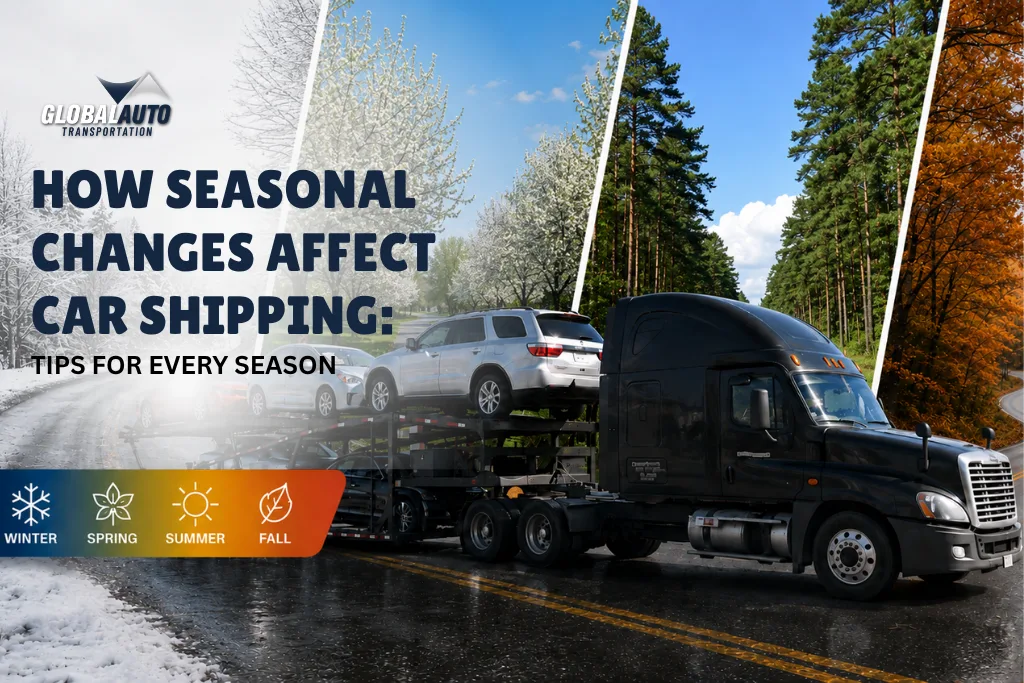
 Every season has its own rhythm, and the road follows suit. Understanding how weather affects car shipping is essential, especially if you’re planning to transport your vehicle in the near future. From changing weather conditions and demand fluctuations to route accessibility, seasonal factors can influence cost, delivery time, and overall vehicle safety.
Natural elements like snowstorms or extreme summer heat can create real challenges during transport. That’s why following the right seasonal car shipping tips can help you avoid delays, reduce risks, and ensure your vehicle arrives safely.
How Winter Weather Impacts Car Shipping
When it comes to winter car shipping, conditions can be particularly challenging. Snow, ice, and road closures often cause delays, while freezing temperatures can affect your vehicle during transit. In many cases, weather-related disruptions are unavoidable, but preparation makes a big difference. Planning your shipment in advance and regularly checking forecasts can help minimize unexpected issues.
It’s also important to prepare your car for cold conditions. Make sure antifreeze levels are topped off, tire pressure is properly adjusted, and the fuel tank has enough gas. These small steps can prevent mechanical problems during transport. For added protection, enclosed auto transport is often recommended during winter months. It shields your vehicle from snow, ice, and road salt, helping it arrive in better condition despite harsh weather.
Spring and Fall: Unpredictable Weather and Its Effects
Spring and fall may seem like ideal times for shipping a car, but they come with their own set of challenges. These transitional seasons are known for unpredictable weather; sudden rain, storms, and fluctuating temperatures can create slippery and unsafe road conditions. This unpredictability is a perfect example of how weather affects car shipping, often leading to delays or route changes. To stay ahead, flexibility is key. Allow extra time in your schedule and be prepared for minor disruptions. It’s also a good idea to document your vehicle’s condition before shipping, so you have a clear record in case of any issues. Being proactive during these months can significantly reduce risks and help ensure a smooth delivery.
With the end of autumn, many people often referred to as “snowbirds” begin relocating from colder northern states to warmer regions like Florida, Arizona, or Texas. This seasonal migration creates a noticeable spike in demand for auto transport services. As a result, availability can become limited, prices may increase, and delivery times can be slightly longer than usual.
A similar trend occurs in early spring when snowbirds return north, again impacting carrier availability and scheduling. This surge in demand, combined with already unpredictable weather conditions, makes spring and fall some of the busiest and trickiest times for car shipping. Planning your shipment ahead of these peak migration periods can help you secure better rates and more reliable pickup dates, making your overall experience smoother despite the seasonal challenges.
Summer Car Shipping Considerations
While summer offers clear skies and longer days, summer car shipping comes with its own set of concerns. High temperatures can affect your vehicle in several ways. Heat can increase tire pressure, strain the battery, and even cause interior materials to fade or crack. In addition, summer is considered the peak season for auto transport, meaning higher demand and potentially increased shipping costs.
To avoid complications, it’s best to plan ahead. Booking your shipment early not only secures availability but can also help you avoid price spikes. Before shipping, check all fluid levels, ensure proper tire pressure, and consider using sun protection for the interior. These simple steps can make a big difference in maintaining your vehicle’s condition during transport.
Choosing the Right Transport Option for Seasonal Challenges
Selecting the right transport method plays a crucial role in handling seasonal challenges. Enclosed transport offers the highest level of protection against extreme weather conditions, including snow, rain, and intense heat. It’s especially useful during winter and peak summer months when environmental exposure can cause damage.
On the other hand, open transport is a more budget-friendly option and works well during milder weather conditions or for shorter distances. Understanding your options and applying practical seasonal car shipping tips can help you make the best decision based on the time of year and your specific needs.
Seasonal changes have a significant impact on vehicle transport, and understanding how weather affects car shipping can help you plan more effectively. Whether you’re dealing with the challenges of winter car shipping or preparing for the heat of summer car shipping, the right approach makes all the difference. By planning ahead, preparing your vehicle properly, and choosing the right transport method, you can reduce stress and ensure a smooth shipping experience. With the right strategy, your vehicle can be transported safely and efficiently no matter the season.