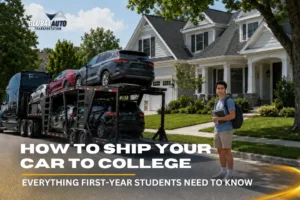
 Moving into college already comes with a long list: housing, classes, tuition, furniture, travel, and figuring out where everything needs to go. If school is hundreds or thousands of miles from home, adding a multi-day drive to that list may not make much sense.
That is where college student car shipping can help. Instead of driving the vehicle across the country, a professional auto transporter moves it while the student flies or travels separately. But shipping a car to college takes more planning than simply choosing a pickup date. Before booking, students and parents need to know whether the school allows first-year students to have vehicles, where the car can be delivered, who will meet the driver, and what happens if the transport schedule overlaps with move-in.
The first question, then, is not “Which carrier should I book?”
It is “Am I actually allowed to keep a car at college?”
University rules vary significantly. Seattle University, for example, currently prohibits first-year undergraduate students living on campus from bringing cars during their first year unless they qualify for an approved exception. Cornell discourages first-year students from bringing cars, but limited resident parking permits are available on a first-come, space-available basis. Confirm your own school’s current rules before paying for car shipping for college students.
How to Ship a Car to College: The Complete Process
Learning how to ship a car to college is easier when you separate the process into a few decisions rather than trying to coordinate everything at once.
1. Confirm that you can bring the car.
Start with the university’s transportation or parking department. Do not assume that being admitted, living on campus, or having a driver’s license automatically makes you eligible for student parking. Check whether first-year students can register vehicles, whether resident permits are available, and whether you need approval before bringing the car to campus. Seattle University’s rules show why this matters. Its first-year resident restriction applies specifically to traditional first-year undergraduates living on campus, while other categories of students may be treated differently.
2. Check the parking and move-in rules.
Being allowed to own a car at school does not necessarily mean you can pull up to your residence hall with an auto carrier.
Look at:
- parking permit requirements
- move-in traffic plans
- temporary unloading zones
- street restrictions
- residence-hall access
- gated entrances
- overnight parking rules
Knowing these details early makes college car transport much easier to coordinate.
3. Request your shipping quotes.
For an accurate student car shipping quote, be ready to provide:
- pickup city or ZIP code
- college city or ZIP code
- vehicle year, make, and model
- whether the vehicle runs and drives
- preferred pickup period
- preferred delivery period
- open or enclosed transport preference
When comparing companies, first understand who you are dealing with. An auto transport broker arranges transportation with a carrier. The motor carrier is the company that physically transports the vehicle. FMCSA advises consumers to distinguish between the two and states that interstate auto transport brokers and carriers are required to be registered with the agency. You can use FMCSA’s SAFER Company Snapshot to look up carrier information by USDOT number, MC/MX number, or company name.
4. Choose open or enclosed transport.
Most everyday student vehicles can be moved using open transport, where multiple vehicles travel together on an uncovered carrier. Open car transport for students is generally the standard option to consider when the goal is practical vehicle transportation. Enclosed transport places the vehicle inside a covered trailer and limits its exposure to weather and road debris. Students or parents may consider it for collector cars, luxury vehicles, exotics, or other vehicles where the added protection is worth the additional cost. Neither option is automatically right for every student. Match the service to the vehicle, budget, and level of protection you want.
5. Decide who will handle pickup.
The student does not necessarily have to be at the original pickup location.
A parent, family member, or another authorized adult may be able to release the vehicle, depending on the transporter’s procedures. Whoever handles pickup should be able to provide the keys, participate in the inspection, review the vehicle condition paperwork, and sign the required documents.
6. Choose an accessible delivery location.
This part is easy to overlook. An auto carrier is much larger than the car it is delivering. Narrow campus roads, low tree branches, tight turns, security gates, pedestrian areas, and heavy move-in traffic can make residence-hall delivery impractical. For student vehicle transport, a nearby wide street or accessible parking area may be a better meeting point. Seattle University, for example, limits motor vehicle access to university parking lots and direct access routes, while access to pedestrian malls is restricted without permission. Coordinate the final meeting point with the transporter rather than assuming the truck will be able to stop directly outside the dorm.
7. Inspect the vehicle at delivery.
When the vehicle arrives, compare its condition with the pickup inspection before signing the final paperwork. Do this in good lighting whenever possible. Look around the entire car, photograph anything that appears different, and note any concerns on the delivery documentation before signing. Also remember that auto transportation works around routes, traffic, weather, loading schedules, and other operational variables. Treat pickup and delivery dates as estimated windows unless the transporter has specifically provided a different written arrangement, rather than planning college move-in around an assumed exact arrival time.
How Much Does College Student Car Shipping Cost?
There is no single college student car shipping cost that applies to every student. Two students attending the same university can receive different quotes if one car is being picked up 200 miles away and the other is traveling across the country. The vehicle, timing, route, and transport method all affect the final price.
The main factors affecting the cost to ship a car to college include:
- Distance. Longer transportation distances generally require more carrier time, fuel, and operating resources.
- Pickup and delivery locations. Major transportation corridors may offer different carrier availability than remote or difficult-to-access locations.
- Open versus enclosed transport. Enclosed transportation generally costs more because it offers additional protection and carries fewer vehicles.
- Vehicle size and weight. A large pickup or SUV occupies more trailer space and adds more weight than a compact sedan.
- Vehicle condition. An inoperable car may require additional equipment or handling to load and unload.
- Season and demand. August concentrates college move-ins into relatively narrow periods across the country. On some routes, that can mean tighter carrier availability than during less active periods.
- Scheduling flexibility. A broader pickup window can give the transporter more routing flexibility than a very narrow schedule.
- Campus accessibility. If a transporter cannot safely reach the requested address, you may need to coordinate an alternative delivery location nearby.
Request quotes early enough to compare your options, but be cautious about universal advice such as “book exactly four weeks ahead.” Carrier availability differs by route and date. Also read the quote carefully. Confirm what the quoted amount includes, what could change the price, how payment works, and whether any remaining balance is due at pickup or delivery. Do not assume a company offers a student discount unless the quote or company terms specifically say so.
How to Prepare Your Car and Complete the Vehicle Condition Report
Your car should be ready for inspection before the carrier arrives. Good preparation also makes it easier to document the vehicle accurately.
Clean and inspect the car.
Wash the exterior so scratches, chips, dents, and other existing marks are easy to see. You do not need a professional detail. The goal is simply to make the vehicle’s current condition visible.
Photograph existing damage.
Take clear photos of:
- the front and rear
- both sides
- bumpers
- wheels
- windshield
- roof when practical
- any existing dents, scratches, or chips
Keep the original photos until the shipment is complete.
Remove personal belongings.
Treat college move-in car shipping as vehicle transportation, not as a substitute for shipping your dorm room. Remove valuables, electronics, medications, important documents, and loose personal property from the vehicle. If you want to leave any belongings inside, first ask the transporter for its written policy because acceptance rules and coverage can differ. Remove toll transponders and parking passes as well so they are not accidentally charged or lost during transportation.
Leave about ¼ tank and check the car.
Unless your transporter gives you different instructions, approximately a quarter tank of fuel is generally enough for loading and unloading without carrying unnecessary fuel weight.
Before pickup:
- Check that the battery is charged
- Make sure the tires are properly inflated
- Check for obvious fluid leaks
- disable alarms
- secure removable exterior accessories
- Make sure the vehicle can start, steer, and brake if it is being booked as operable
Tell the transporter in advance if the vehicle is not running. An inoperable vehicle may require different loading equipment.
Prepare keys and review the report.
Have a working set of keys available for the transporter. At pickup, the vehicle will be inspected and its existing condition documented. The vehicle condition report provides an important record of how the car looked before transportation. Do not treat the paperwork as something to sign automatically. Walk around the vehicle, compare the documented marks with the actual car, and make sure the report accurately reflects its condition before signing. Repeat that process at delivery. A careful car shipping inspection at both ends creates a much clearer record if a damage question later arises.
How Auto Transport Insurance Works When Shipping to College
Insurance is one of the easiest parts of auto shipping to misunderstand. A company saying it is “insured” does not, by itself, tell you exactly what will happen if your car is damaged. There are three separate concepts to understand.
The carrier’s federal public-liability filing
FMCSA requires certain interstate for-hire motor carriers to maintain minimum levels of financial responsibility. For non-hazardous for-hire property carriers, the federal requirements shown by FMCSA concern bodily injury and property damage liability, with the required level depending in part on vehicle weight. That filing should not be confused with a promise that every type of damage to the vehicle being transported is automatically covered.
Carrier cargo coverage
A transporter may carry motor-truck cargo or other coverage that can apply to vehicles being transported. However, FMCSA’s current insurance filing chart lists $0 in federally required cargo insurance filings for ordinary for-hire property carriers, while specific cargo filing requirements apply to household-goods carriers. That distinction matters.
Instead of relying on a phrase such as “fully insured,” request the transporter’s written carrier cargo coverage information and ask:
- What types of vehicle damage are covered?
- What exclusions apply?
- Is there a deductible?
- What are the coverage limits?
- Who files the claim?
- What documents are needed?
- How quickly must damage be reported?
Your personal auto insurance
Your own auto policy is separate from the transporter’s coverage. Before shipping a car to college, the student or parent can contact the personal auto insurer and ask whether the policy provides any protection while the vehicle is being commercially transported. The answer depends on the individual policy, so do not assume coverage applies.
What happens if you find damage?
The pickup and delivery documentation can become important during a vehicle shipping damage claim. At delivery, compare the car with the pickup condition report. Photograph any new damage immediately and make sure concerns are recorded on the delivery paperwork before you sign.
Then follow the transporter’s written claims procedure and preserve your photos, reports, shipping documents, and other relevant records. Good documentation cannot guarantee the outcome of an insurance claim, but it gives you a clearer record of the vehicle’s condition before and after transportation.
Planning Campus Car Delivery Around College Restrictions
The last few miles of car shipping to campus sometimes require more planning than the previous thousand.
A full-size car carrier may not be able to navigate:
- residence-hall roads
- narrow residential streets
- low-clearance areas
- gated entrances
- congested move-in zones
- pedestrian-only sections
- restricted loading areas
Before setting your campus car delivery location, check the school’s transportation and parking information.
Specifically, find out:
- whether first-year students may keep cars on campus
- whether you qualify for a college parking permit
- whether permits are limited or sold based on availability
- whether move-in creates temporary traffic restrictions
- where loading and unloading are permitted
- whether overnight parking requires a specific permit
- whether campus entrances are gated or restricted
- whether you need an off-campus delivery point
- who will meet the driver and sign the paperwork
There is no nationwide rule for first-year student parking rules.
Seattle University’s current policy prohibits traditional first-year undergraduate resident students from bringing cars to campus during their first year, with limited waiver provisions for qualifying circumstances. Cornell takes a different approach. The university says first-year students are discouraged from bringing a car, but limited resident permits are available. Its general student parking information also states that permits are sold on a first-come, first-served, space-available basis. Your college may have an entirely different policy.
That is why parking eligibility should be confirmed before the car is shipped, not after the carrier is already headed toward campus. Once delivery is arranged, choose a location where the transporter can safely enter, unload, and leave without blocking traffic. Confirm the meeting location and contact information with the driver or transportation provider.
When the car arrives, do one final walkaround before signing:
- Check the vehicle in good lighting.
- Compare it with the pickup condition report.
- Photograph any condition that appears new.
- Record concerns on the delivery paperwork.
- Keep a copy of the signed documentation.
Then you can head to campus knowing the transportation part of move-in is finished.
What to Do Before You Book Car Shipping for College Students
College student car shipping can remove a long drive from an already busy move-in schedule, but the smoothest shipments start with planning rather than booking. First, confirm that the college actually allows the student to keep a vehicle and determine whether a parking permit is required. Then verify the transportation provider, compare service options, understand the quote, and build enough flexibility into the pickup and delivery schedule.
Before the car leaves, prepare it properly and create a clear record of its condition. Review the transporter’s insurance information instead of relying on broad promises about coverage. Finally, arrange a delivery location that a large carrier can safely access and inspect the vehicle carefully when it arrives. For families considering car shipping for college students, those few checks can make the difference between simply getting the car across the country and having the entire move-in plan work the way it was supposed to