 A classic car is more than steel and chrome, it’s a time machine on wheels. It’s a rare piece of history, craftsmanship, and passion that modern cars just don’t replicate.
Every vehicle involved in shipping classic cars has its own story. Some have been restored over years. Others have been preserved carefully across generations. Either way, they carry both financial and emotional value.
That’s why moving them isn’t the same as transporting a regular vehicle. The age, delicate construction, and overall fragility all matter. Even something small, a scratch, a chip in the paint can affect authenticity and reduce value. That’s where proper vintage car transport becomes essential.
Why Classic and Vintage Cars Need Special Handling
Classic and vintage cars aren’t built like modern vehicles.
They have original finishes, rare parts, and components that are often impossible or extremely expensive to replace. That’s what makes them valuable, but also what makes them vulnerable. Unlike newer cars with standardized systems, these vehicles need careful handling at every step. Proper shipping classic cars means understanding that you’re not just moving a vehicle you’re protecting something irreplaceable.
Choosing the Right Type of Transport
One of the biggest decisions in vintage car transport is how the vehicle will actually be shipped.
In most cases, enclosed auto transport is the best option. Why? Because it adds a layer of protection that open transport simply can’t offer. Your car stays shielded from:
- Road debris
- Weather conditions
- Dust and dirt
- Flying rocks
That extra protection matters. Especially for rare or high-value cars, enclosed auto transport helps preserve both the condition and long-term value of the vehicle.
Open vs. Enclosed Transport: Pros and Cons
When planning shipping classic cars, you’ll usually choose between open and enclosed transport.
Open transport is more common and more affordable. It works well for standard vehicles, but it does leave the car exposed to weather and road conditions during transit. For classic vehicles, that risk can feel unnecessary.
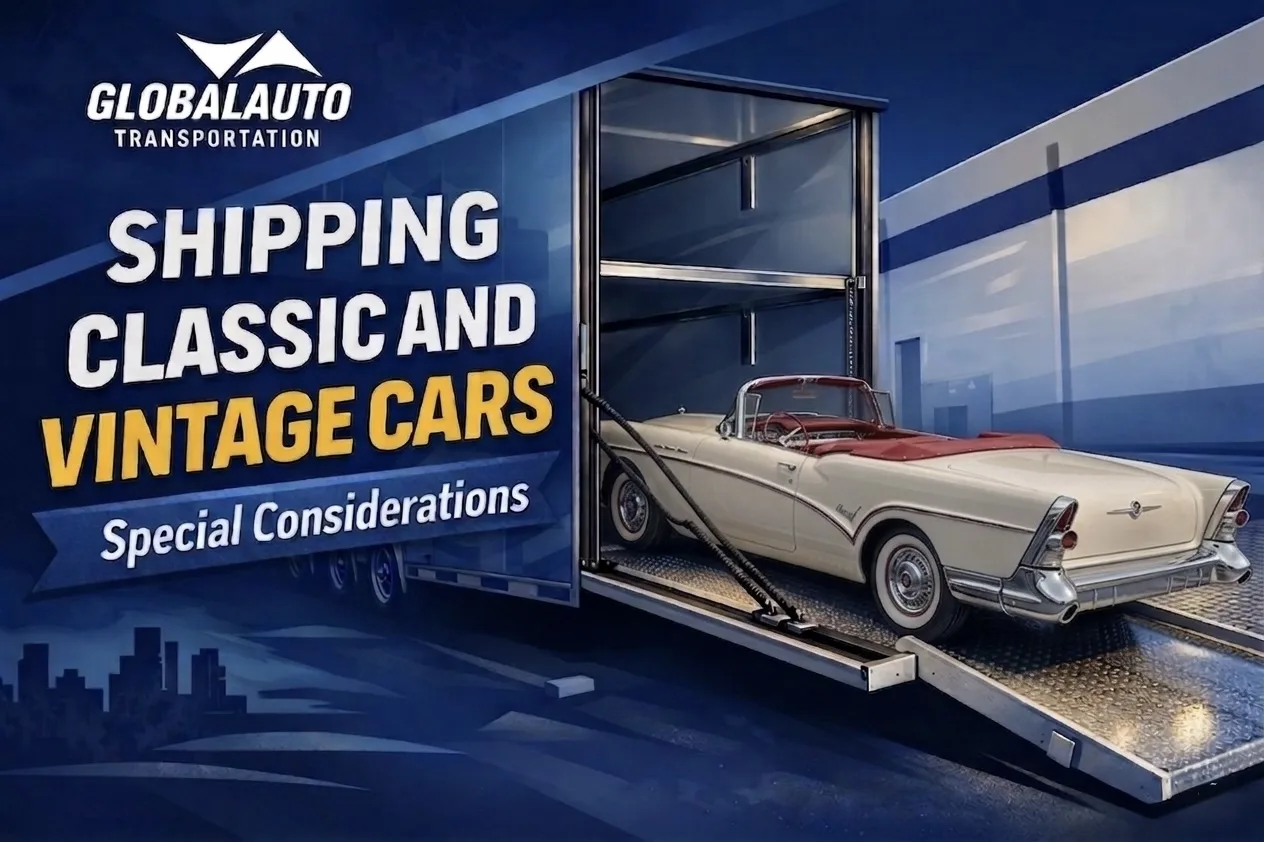
With enclosed auto transport, the car is fully protected inside a covered trailer. There’s less exposure, fewer transfers, and often more careful handling overall. Many enclosed carriers also offer lift-gate loading, which is especially helpful for low-clearance or delicate vehicles. For most collectors, enclosed transport isn’t just a preference, it’s the safer choice.
Preparing Your Classic or Vintage Car for Shipping
A smooth transport starts with good preparation.
Before handing your vehicle over for vintage car transport, a few simple steps can make a big difference:
- Clean the Vehicle
Wash the car thoroughly so you can clearly see and document any existing marks or imperfections. - Document the Condition
Take detailed photos from all angles. Include close-ups of any scratches or wear. This helps protect you if a claim is ever needed. - Disable the Alarm
Prevent unnecessary disruptions during transit. - Check for Leaks and Mechanical Issues
Even small issues can cause delays or complications during transport. - Keep Fuel Low
About a quarter tank is enough. It reduces weight and improves safety.
These steps help ensure your car arrives the same way it left no surprises.
Insurance Considerations for Classic Cars
Insurance is a big part of shipping classic cars. Standard policies don’t always cover what these vehicles are truly worth. That’s why classic car shipping insurance is so important. Specialized coverage often includes “agreed value” protection. That means if something happens, you’re reimbursed based on the full insured value not just a depreciated market estimate.
Before shipping, it’s worth taking a few minutes to:
- Review the carrier’s insurance policy
- Check coverage limits and exclusions
- Confirm whether your personal policy applies
- Understand how claims are handled
It’s one of those things you hope you won’t need, but you definitely want it in place.
Tracking and Communication During Transport
Once your car is on the move, staying informed matters. Many companies now offer GPS tracking, so you can check your vehicle’s location in real time. If that’s not available, regular updates calls, texts, or emails should still be part of the process. Good communication makes a big difference. It keeps things predictable and helps you plan around delivery.
Shipping classic cars isn’t complicated but it does require the right approach. With the right preparation, proper vintage car transport, and the added protection of enclosed auto transport, the process becomes much more predictable. Add in the right classic car shipping insurance, and you’re covering all the important bases.
At that point, it’s not just about moving a car. It’s about making sure something valuable both financially and personally arrives exactly the way it should.