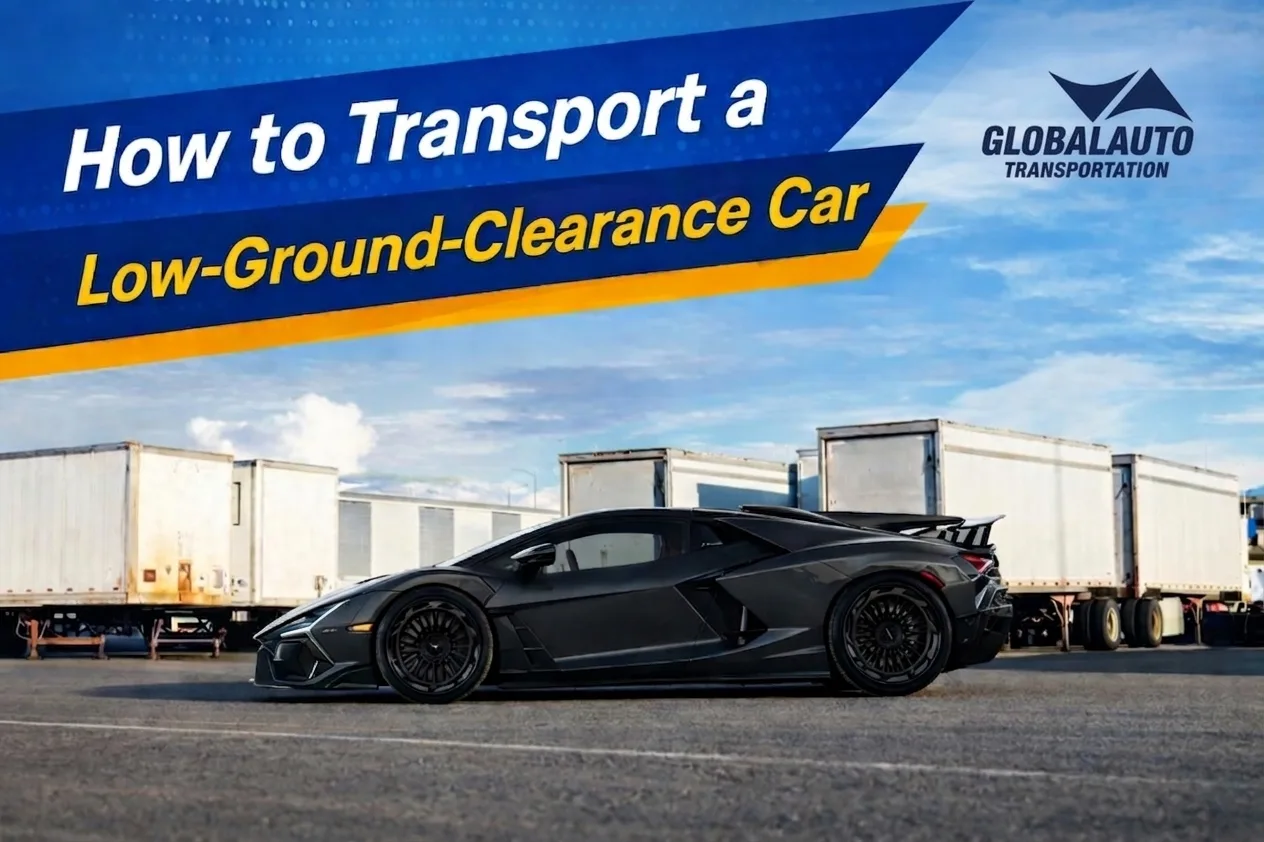
 If you are an owner of a sleek sports car or luxury coupe, you will definitely agree that driving over a steep driveway or uneven road could be quite a nerve-wracking process. Even at a small wrong angle, you can find yourself wincing at that all-too-familiar scraping sound. It does not really matter whether it’s a Ferrari, Tesla Model S, Porsche 911, or even a custom-tuned BMW; these cars sit low to the ground to enhance speed and aerodynamics. However, transporting such cars is a real headache, since their unique design makes them especially delicate when it comes to transport.
So what exactly is ground clearance and why does it matter when shipping your car? Simply said, it is the space between your car’s lowest point and the road surface. Generally, most cars have between 5 and 8 inches of clearance, while sports and luxury vehicles often sit closer to 3-4 inches. This means that traditional car carriers would not be able to ship such kinds of cars without damaging them.
In this blog, we’ll break down everything you need to know about shipping low-ground-clearance cars safely, from the right equipment to use to how to ensure your prized vehicle arrives in flawless condition.
Can You Ship a Low-Ground-Clearance Car?
Of course, there are several ways for shipping low-ground-clearance cars safely, especially if you trust this process to professional experts who understand the unique difficulties of these cars. The answer lies in preparation, the right equipment and expert care throughout transportation.
As practice shows, most car owners think twice when it comes to transporting their special cars. The main reason for worrying is that ramps or uneven loading can damage delicate components of the car. And this concern is completely justified, since cars with only 3-4 inches of clearance leave almost no margin for error. But do not panic; this is good news for you. Nowadays, there are leading transporting services like Global Auto Transportation that are fully equipped for transporting any type of vehicle.
At this point, you may be thinking, “Is it better to drive instead of shipping a car?” It depends on several aspects. For example, for short distances on smooth roads, driving might be fine, especially if the car is fully insured. However, for long-distance moves or cross-country relocations, exotic car shipping is a better option, and here is why. In this case, you minimize common issues like wear and tear. Additionally, it protects the car from unexpected road hazards, weather and debris.
Generally, most professional car transport companies use special equipment, like hydraulic lift gates or extended low-angle ramps that prevent cars from scraping during loading or unloading. Enclosed trailers create another layer of protection, shielding your vehicle from unwanted elements. Additionally, reputable transport companies provide full insurance coverage, ensuring that if anything does happen, which is extremely rare, you’re completely protected. In short, shipping your low-clearance vehicle isn’t just possible; it’s the preferred method when you value your car’s condition, performance and peace of mind.
Open vs. Enclosed Transport: Which Is Better for Low-Clearance Vehicles?
When it comes to shipping a low-clearance car, the type of transportation method that you choose really matters. Nowadays, there are several types of carriers that are suitable for different types of vehicles.
Open transport is the most popular and affordable type of transportation. Cars are loaded onto a multi-level trailer and remain exposed to the elements during transit. Open transport is the best option for standard sedans, SUVs or daily drivers. However, they are not suitable for cars that sit close to the ground. The steep ramps used on open carriers can scrape the undercarriage or bumpers of low-profile vehicles.
Enclosed transport, in its turn, fully protects your car from weather, debris and road dust. These carriers use hydraulic lift gates instead of steep ramps, ensuring safe loading and unloading. Especially for exotic and luxury cars, these enclosed trailers are the best option to ship a low-clearance car.
All in all, open carriers are best for transporting daily cars. But in case you are moving a prized sports car or collectible one, then enclosed transport is the only way to make sure that your car will arrive intact and without damage.
How to Avoid Damage When Shipping a Low-Clearance Car
As a low-clearance car owner, you should know that shipping such kinds of cars has unique risks; however, with the right preparation, you can be 100% sure that your unique car will arrive in the best condition.
Common risks: During loading and unloading, you run the risk of damaging low-hanging parts, scraping the undercarriage, and bumping spoilers or body kits. Open carriers present a greater risk than enclosed ones because of the steep ramps, but even enclosed carriers require careful handling.
Steps to minimize damage:
- Inspect and document your car’s condition. Take pictures from various angles to document scratches, dents and other pre-existing concerns.
- Secure or remove low-hanging parts. Spoilers, side skirts and aftermarket body kits should be safely removed or reinforced to prevent contact during transportation.
- Check tire pressure and fluids. Properly inflated tires and adequate fluid levels enable safe handling when driving onto the trailer.
- Follow low-clearance driving tips to get onto the trailer. Approach ramps gently and at an angle where possible, and consider using a spotter to assist the vehicle onto the liftgate.
Shipping a low-ground-clearance car doesn’t have to be stressful. Whether you own a Ferrari, Tesla Model S, Lamborghini or Porsche 911, the key is choosing the right transport method and experienced professionals. With proper preparation, enclosed carriers, and the use of hydraulic liftgates, you can avoid common risks like scraping or undercarriage damage. In fact, shipping is often the safest option for long distances, helping protect your car from wear, road hazards and unnecessary mileage.