 Driving a truck is a demanding responsibility that requires skills, focus and constant attention to safety. Truckers operate massive vehicles in very challenging conditions, such as highways with fast-moving traffic, unpredictable weather, long working hours, fatigue and even wild animals suddenly crossing the road.
One mistake can have terrible outcomes. Because of this, trucking is not suitable for nervous or inexperienced drivers.
Even experienced drivers must put safety first. No deadlines, mileage goals or dispatch pressure are worth risking your life and putting others at risk.
The safety tips for truck drivers listed below are based on the best practices of experienced truck drivers, highway safety professionals and the industry standards related to safety measures. Together, they create habits that can help prevent risky situations and make sure that everyone is safe around.
1. Conduct Thorough Pre-Driving Truck Inspection
Before starting driving, a detailed pre-driving inspection is a must. It should verify that the vehicle is safe to drive and that it is functional and compliant. Drivers usually do the checkup during the start of their shift or when they need to drive a new trailer. The process usually takes about 30 minutes to an hour and is logged in under on-duty.
The full inspection includes:
- Walk around the vehicle.
- Checking the engine parts such as belts, hoses, filters and fluids.
- Checking the braking system, such as the drums, linings, chambers, air lines, etc.
- Checking tires and wheels, looking at how much tread is left on tires, the pressure, ABCs, etc.
- Inspecting the suspension (springs, airbags, mounts, shocks, etc.)
- Checking the steering components, i.e. the gearbox, tie rod, etc.
- Inspecting the mirrors and windshields.
- Checking the lights and reflectors, such as headlights, break lights, turn signals, etc.
- Checking the coupling devices, i.e., 5th wheel, kingpin, lock jaws, etc.
- Inspecting electrical lines and air hoses.
- Having a look at securement, such as straps, chains, etc.
- Checking trailer brakes and suspension.
- Having a quick look at placards, registration and all the documentation.
- Inspect in-cab indicators and buttons (fuel, DEF, oil pressure, air pressure, speedometer, etc.).
A detailed pre-drive checkup at the start of your day can prevent breakdowns or serious accidents, so never skip this part.
2. Hold the Wheel Correctly
Keep your hands at the “9 and 3” positions on the steering wheel. This placement:
- Provides maximum control,
- Prevents oversteering,
- Reduces fatigue chances during long hours of driving,
- Gives you a faster and more accurate response in case of an emergency.
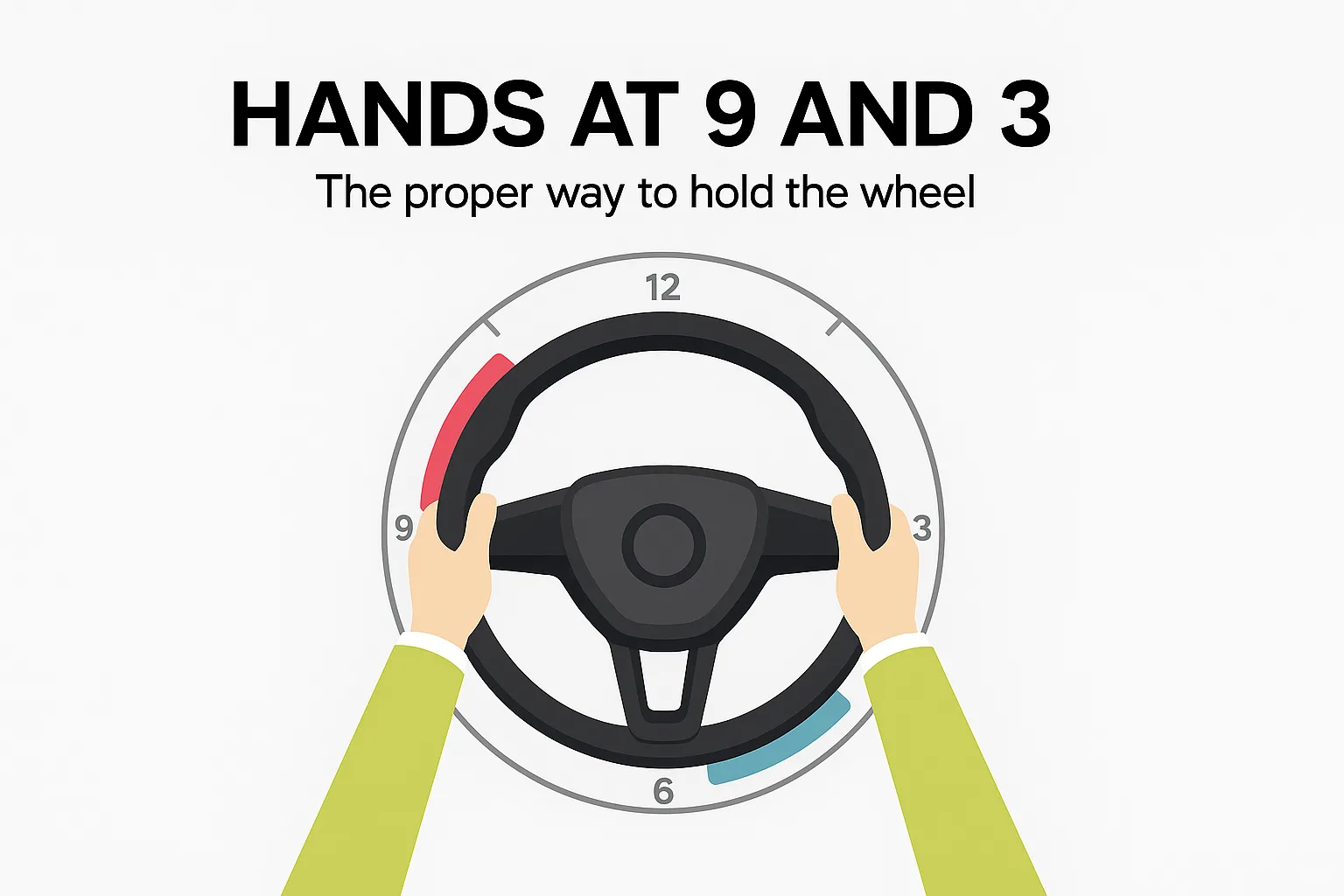
Do not make sudden and aggressive movements when holding the steering, particularly when operating a loaded trailer. Remember that the trailer does not go in the same direction as the cab. In turning, therefore, be sure to take big turns and make sure you have plenty of space.
3. Keep Distance and Follow the 3-7-15-Second Rule
It’s a fact that trucks need more stopping distance than usual cars. The safest way to measure that space is by using the “3-7-15 Second Rule.” This “rule” adjusts your distance from other vehicles on the road based on the size and weight of your car and the state of the road.
How the rule of seconds works:
- 3 seconds for a car in its possible conditions
- 7 seconds for SUVs or empty trucks
- 15 seconds for fully loaded tractor-trailers.
Bad weather requires more distance. In these kinds of conditions, you need to raise your gap from 4 to 8 seconds for small cars and more than 15 seconds for big trucks.
How do you apply it?
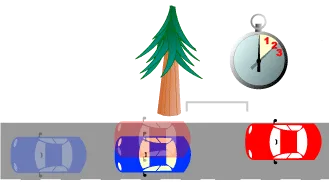
- First, pick a fixed roadside object you see. It could be a sign, tree or an overpass.
- Start counting “one thousand one, one thousand two…” etc. when the car in front of you passes that object.
- If you get to that object before your count matches your rule (3, 7, or 15 seconds), it means you’re too close and need to back off.
Why the rule matters
- Reaction time: Drivers need up to 1.5 seconds to notice a hazard and another 1.5 seconds to respond to it. It’s a well-known fact.
- Size differences: Larger vehicles take longer to stop, especially when they’re fully loaded.
- Weather Impact: Wet or icy roads increase the stopping distance.
Never allow impatient drivers to pressure you into tailgating. That following gap is your safety buffer. It helps you to have time to respond, decelerate and prevent impact on the rear part of the car. Following distance is one of the major trucking safety tips that a professional truck driver needs to practice.
4. Keep Your Lights On
With your truck’s lights switched on, other drivers see you clearly, especially as trucks are big and can be difficult to judge from a distance. Clean, bright lights make it easier for everyone around you to understand how large your vehicle is and how fast it’s moving.
Always check that:
- Your headlights are turned on when it’s dark or hard to see
- Marker and clearance lights are clean so your truck’s size is visible
- Tail lights are not covered by dirt, rain, ice, or snow
- Any burned-out bulbs are replaced right away
Turn on your headlights whenever visibility drops, i.e. during rain, fog, snow, dust or even early in the morning or late in the day. In many states, this is required by law. More importantly, it helps other drivers see you sooner and gives them more time to react, which keeps everyone safer on the road.
5. No Unnecessary Lane Changes
Big trucks have large blind spots, also called “no-zones,” where smaller vehicles can completely disappear from your view. The more often you change lanes, the more chances you have to miss something and cause a dangerous situation.
Use these safe habits on the road:
- Check your mirrors every 10–15 seconds
- Signal your intentions early
- Change lanes slowly and carefully
- Never make sudden, last-minute lane changes
Plan ahead so you can stay in the same lane as much as possible
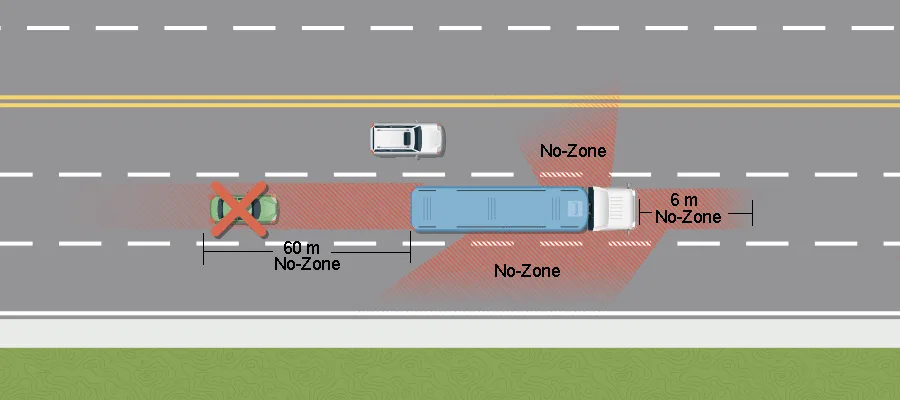
If you are not absolutely sure the lane is clear, do not move. Keeping lane changes to a minimum is one of the easiest ways to stay safe and avoid accidents.
6. Take Poor Weather Conditions Seriously
Bad weather is one of the top causes of truck accidents, and even experienced drivers must adjust their habits when conditions change. Rain, snow, etc. can make the road slippery and decrease visibility, so extra caution is needed. If you follow these truck driving safety tips when the weather gets bad, you’ll win:
- Slow down, speed limits you see on the roadside are based on clear weather, not severe conditions.
- Increase the distance between you and others to get more time to stop.
- Have tire chains if you drive through snowy or mountainous areas.
- To avoid problems with your fuel line, keep your tank at least half full when it’s cold outside.
- Watch for black ice, especially on bridges and shaded areas.
- Use low-beam headlights in foggy areas.
- Avoid sudden braking or fast lane changes because of skidding.
If the weather gets too bad, find a safe place to pull over and wait it out. No delivery or deadline is worth putting your safety or anyone else’s on the road at risk.
7. Load and Unload With Extra Caution
When you’re loading and unloading items, it can be just as dangerous as when you’re driving, especially if you’re moving heavy things in small spaces. One mistake can hurt workers, damage freight or make your truck move dangerously on the road. Always follow these steps to stay safe:
- Put the parking brakes on both the trailer and the tractor.
- Use wheel chocks to keep the vehicle from moving.
- Before you leave, make sure the dock plate is gone.
- Confirm that no one is inside the trailer.
- Make sure the cargo is evenly spread out and safely secured.
- Recheck all after the first 50 miles of driving.
Not properly secured cargo impacts balance, braking and handling. It can cause rollovers, jackknifes or falling freight, one of the most dangerous situations as a driver you can face.
8. Use Cruise Control
Cruise control can help you stay awake on long, straight miles of highway, but it can be dangerous when you need to be in full control of the truck. Know when to turn it off:
- On wet, icy or slippery roads.
- In heavy traffic.
- On hills, curves, or mountain roads.
- Near construction zones.
- When descending steep grades.
Cruise control can cause your wheels to spin on icy roads, leading to a complete loss of control. Always rely on manual control when traction or reaction time is critical.
9. Manage Fatigue Effectively
13% of all the road accidents were caused by truck driver fatigue, according to FMCSA. It can happen to any of us, no matter how experienced we are. Long hours, driving at night and an inconsistent schedule can impact your alertness without you even realizing it. It’s important to be able to spot early warning signs of fatigue:
- Heavy eyelids,
- Frequent yawning,
- Difficulty focusing,
- Drifting across lanes,
- Missing exits.
To avoid fatigue, follow Hours of Service rules and take regular breaks to stretch, walk and reset your focus.
Keep hydrated during your shift, don’t eat heavy meals that make you sleepy and take short naps of 20 minutes when you need to. Keeping a regular sleep schedule, even on days off, helps your body get used to it and stay awake while driving.
No deadline is worth risking your life. If you feel drowsy, don’t try to “push through.” Pull over in a safe place and rest as soon as possible. Fatigue makes driving incredibly dangerous, and stopping early is always better than not stopping at all.
10. Minimize Distractions and Stay Focused
Truck drivers are very at risk when they are distracted because even a short lapse in attention can cause a serious crash. It’s important to keep your eyes and mind on the road because big trucks need your full attention all the time.
Avoid:
- Handling your phone (use hands-free only when it’s legal).
- Eating complicated meals.
- Adjusting GPS or radio while moving.
- Searching for items in the cab.
Staying focused is the foundation of defensive driving. The more attention you give the road, the more time you have to react safely to sudden traffic changes or hazards.
11. Practice Defensive Driving Techniques
Defensive driving means being aware of and ready for problems before they happen. You have to always be ready for what other drivers might do because trucks take longer to stop and have bigger blind spots.
Key practices include:
- Assuming other drivers may not see you.
- Leaving escape routes in traffic.
- Scanning 12 – 15 seconds ahead.
- Slowing down in construction zones.
- Giving aggressive or distracted drivers extra space.
Drivers of passenger cars often don’t know what trucks can and can’t do, but being aware and patient can help prevent accidents.
12. Check Your Vehicle Regularly
Daily checks are important, but regular maintenance is what keeps things safe in the long run. If you don’t take care of your truck, it is much more likely to break down or fail (probably at the worst possible time, Murphy’s Law). Pay attention to early warning signs like strange noises, vibrations, slower braking response, warning lights or any other change in how your truck usually works.
Small problems can quickly turn into catastrophic failures. Keep clear maintenance records and address issues immediately.
13. Handle Challenging Situations Safely
Some driving situations need extra care and certain skills to stay safe. Backing up, going up and down steep hills and driving through construction zones are all dangerous situations where making the right choice is very important.
Backing Up
Use the GOAL method (Get Out And Look) whenever you’re unsure about space or obstacles. If you have a spotter, make sure you both understand the hand signals before you start. If you can’t see your spotter or something changes behind you, back up slowly and stop right away.
Steep Grades
Before you go downhill, shift down early and use engine braking to keep your speed in check. Never coast in neutral. This makes it harder to steer and can cause your brakes to overheat or fail.
Construction Zones
Slow down, leave more space between you and the car in front of you and keep an eye out for sudden lane changes, workers near the road and stops that come out of nowhere. These zones change quickly and need your full attention.
These safety tips for truck drivers form more than just a checklist; they are a mindset. Professional truck drivers protect themselves, their cargo and everyone else on the road by making smart decisions and following the rules.
You can have a long, successful and accident-free career if you follow these safety tips every day. The road deserves respect and the best drivers earn it by being aware, ready and dedicated to safe driving.
And remember that the best trip is always a safe trip. Nothing is worth more than your life.